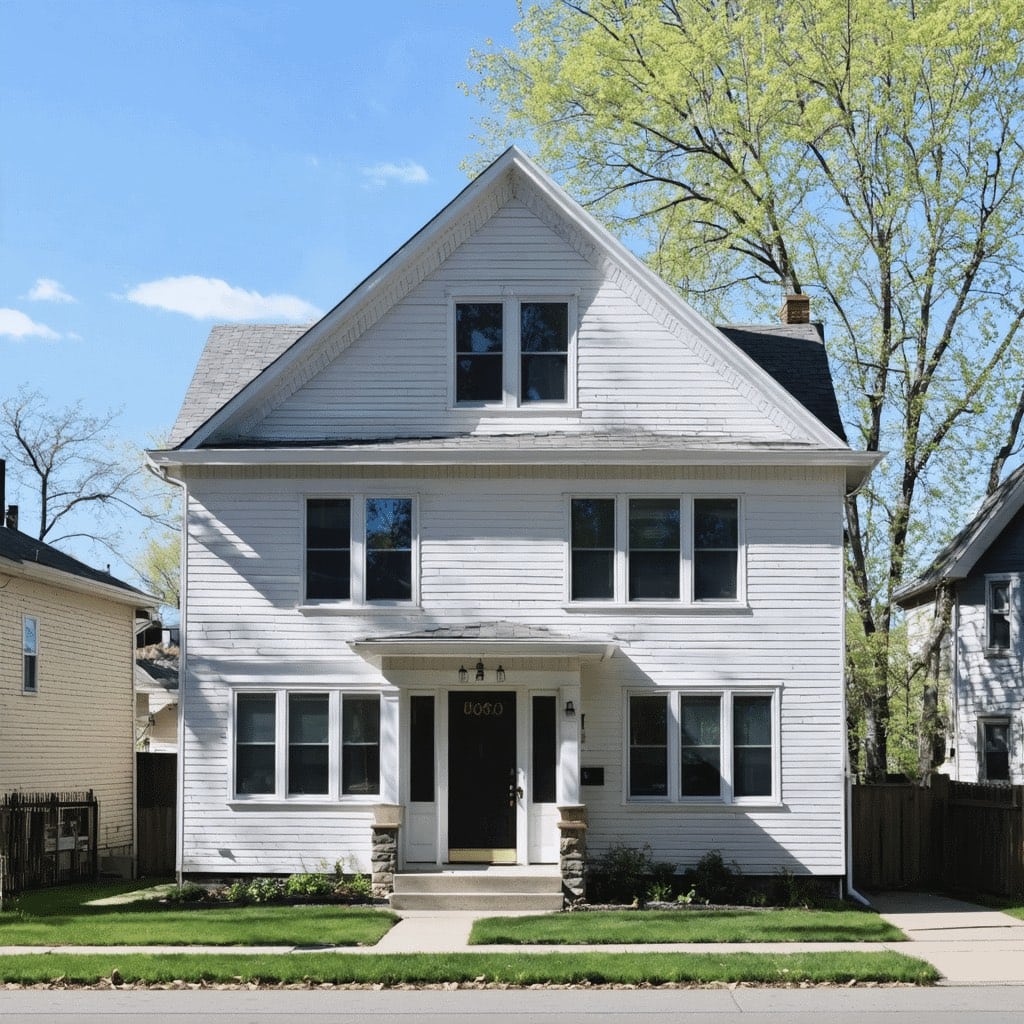

You just inherited your mom’s house in south Minneapolis, the one she lived in for forty years. You live in Denver, your brother is in Duluth, the property taxes are due, and the furnace is older than you are. Nobody in the family wants to live there, but nobody knows what to do with it either.
We work with Minnesota families in exactly this situation all the time. In this guide, we will walk through why inherited houses get complicated, how property passes to heirs in Minnesota, what to know about taxes and disclosure, and how a traditional listing compares to a cash sale. One note first: this is general information, not legal or tax advice, and an attorney or CPA should answer questions about your specific estate.
Why Inherited Houses in Minnesota Get Complicated
Many inherited houses we see sit in older Minneapolis and St. Paul neighborhoods, where a parent or grandparent bought in the 1960s or 1970s and never left. These homes often have block foundations, original plumbing and wiring, and decades of deferred maintenance. The owner kept the house livable but stopped investing in big projects years ago, so heirs inherit a roof near the end of its life, a damp basement, or a boiler that limps through each winter.
The house also keeps costing money while the family decides. Property taxes in Hennepin or Ramsey County, insurance, and utilities add up every month the home sits empty. And a vacant house heading into a Minnesota winter carries real risk. Someone has to keep the heat on to prevent frozen pipes, watch for ice dams, and shovel after every storm, which is hard when the nearest heir lives three states away.
How Property Passes to Heirs in Minnesota
Before anyone can sell an inherited house, someone needs legal authority to sign the deed. How that authority comes about depends on how the estate was set up, and this is often the first delay families hit.
Probate in Minnesota
Probate is the legal process of getting court authority to transfer a person’s property after death. In Minnesota, the court appoints a personal representative who gathers assets, pays debts, and distributes what remains to the heirs, and the process can be informal or formal depending on the estate. The Minnesota Judicial Branch publishes plain-language probate self-help information explaining the process and the personal representative’s duties, and it is a good first stop for any heir.
Until a personal representative is appointed, or another legal mechanism kicks in, nobody can close a sale. We always suggest sorting out the legal side early, even before the family decides whether to sell.
When Probate May Not Be Needed
Not every estate goes through full probate. If the owner recorded a transfer on death deed before passing, the house can pass directly to the named beneficiaries outside of probate. Property held in a trust or in joint tenancy can also transfer without court involvement, and Minnesota has simplified procedures for some smaller estates. Which path applies is a question for a probate attorney, and the answer shapes your timeline for selling an inherited house in Minnesota more than anything else.
Getting Multiple Heirs on the Same Page
When two, three, or five siblings inherit a house together, every decision needs agreement. One heir wants to fix it up and list it, another wants a quick sale, and a third has not returned a call in a month. Meanwhile the carrying costs keep landing on whoever lives closest.
In our experience, families that move forward smoothly agree on three things early: who is authorized to make decisions, what happens to the belongings, and what a realistic price looks like given the home’s condition. A written offer with a firm number and closing date often helps, because it gives everyone something concrete to say yes or no to instead of arguing about hypotheticals.
Taxes and Disclosure: Two Questions Every Heir Asks
We are not accountants or attorneys, but two topics come up in nearly every inherited house conversation, so they are worth knowing at a high level.
First, taxes. When you inherit property, your cost basis is generally stepped up to the fair market value on the date of death, not what the original owner paid decades ago. Heirs who sell reasonably soon after inheriting often owe little or no capital gains tax as a result. The details live in IRS Publication 551, Basis of Assets, and a CPA can apply the rules to your situation.
Second, disclosure. Minnesota’s seller disclosure statutes, Minn. Stat. sections 513.52 to 513.60, generally require sellers to disclose known material facts about the property’s condition. Heirs sometimes worry about this because they never lived in the house and do not know its history. The good news is that you only disclose what you actually know, and when you sell to us, we buy as-is and do our own homework on condition, which takes pressure off out-of-state heirs.
Not sure what your inherited Minnesota house is worth as-is? Request a guaranteed all-cash offer or call us at (612) 930-2000, and we will give you a clear number based on the property’s actual condition.
Listing the House vs. Selling It for Cash
A traditional listing can absolutely make sense for an inherited house that is in good shape, especially if the family has time and someone local to manage it. Be honest about what that path involves, though. Someone has to clear out forty years of belongings, handle repairs and cleaning, keep the house heated and shoveled through showings, and stay available for inspections and negotiations. If the house needs work, buyers using bank financing may struggle to close on it at all, and Minnesota’s selling season is short.
A cash sale trades some price for speed and simplicity, and we are upfront that a cash offer is below full retail value. In exchange, heirs can take the keepsakes they want and leave everything else behind, skip all repairs and cleaning, and close in as little as 7 days or on whatever date works for the estate. We pay closing costs, charge no fees or commissions, and handle paperwork remotely, so an heir in Arizona or Colorado never has to fly back to Minneapolis to sign. Our guide to selling an inherited house in Minneapolis walks through that process step by step, and if a surviving parent is moving to smaller housing instead, our post on selling a Minneapolis home fast when downsizing covers that side of things.
How We Evaluate an Inherited House
Our process is simple. We look at recent sales of comparable homes in the neighborhood, then walk the property once to understand its true condition, from the foundation and roof to the mechanicals and any water or ice dam history. We subtract realistic repair costs and our margin, and we explain the math so the whole family can see how we got to the number.
There is never any obligation. Plenty of families take our offer to a sibling meeting, compare it against a listing estimate, and choose the route that fits. Either answer is fine with us.
Common Questions We Hear
Can we sell the house before probate is finished?
Usually a sale closes only after someone has legal authority to convey the property, such as a court-appointed personal representative or a transfer on death deed beneficiary. That said, you can request offers and gather information in the meantime. We are used to coordinating timelines with estate attorneys, so probate does not have to stop you from planning.
What if the house is full of our parents’ belongings?
Take the photo albums, the keepsakes, and anything the family wants, and leave the rest. We buy houses with furniture, boxes, and tools still in the garage, and we handle the cleanout after closing. For many out-of-state heirs, this is the biggest relief of a cash sale.
Do all the heirs have to agree to sell?
Generally, everyone with an ownership interest or legal authority over the estate needs to sign off on a sale. If your family is split, a concrete written offer often helps focus the conversation, and a probate attorney can explain the options when heirs truly cannot agree. We are happy to answer questions from every sibling on the deed.
Inheriting a house is grief and paperwork at the same time, and it is completely normal to feel stuck between honoring a parent’s home and being realistic about a property nobody can care for. We have helped many Minnesota homeowners move on from exactly this situation.
At MN Nice Home Buyers, we are a local, family-owned team that has been buying Minnesota houses as-is since 2002. Read what past sellers have said about working with us, see how our process works, and request a cash offer whenever you are ready.